If you have been watching home prices in Lakeview and wondering why one website says one thing while another says something else, you are not alone. This neighborhood can look simple on the surface, but the numbers often tell slightly different stories depending on where you look. When you understand what the data is actually measuring, you can make smarter decisions whether you are buying, selling, or simply planning your next move. Let’s dive in.
Why Lakeview market data can differ
One of the biggest reasons Lakeview housing data can feel confusing is that Lakeview is not always defined the same way across platforms. The Lakeview Civic Improvement Association describes the historic area more broadly, while the City Planning Commission places Lakeview within a larger planning district that also includes nearby areas like Lakewood, Navarre, West End, Lake Shore, and Lake Vista.
That matters because boundary changes affect everything from median prices to inventory counts. If one site includes more nearby areas and another uses a tighter Lakeview definition, the results can look different even when both are accurate. For you as a buyer or seller, the key is to compare data within the same boundary set instead of mixing numbers from different sources.
What kind of housing Lakeview offers
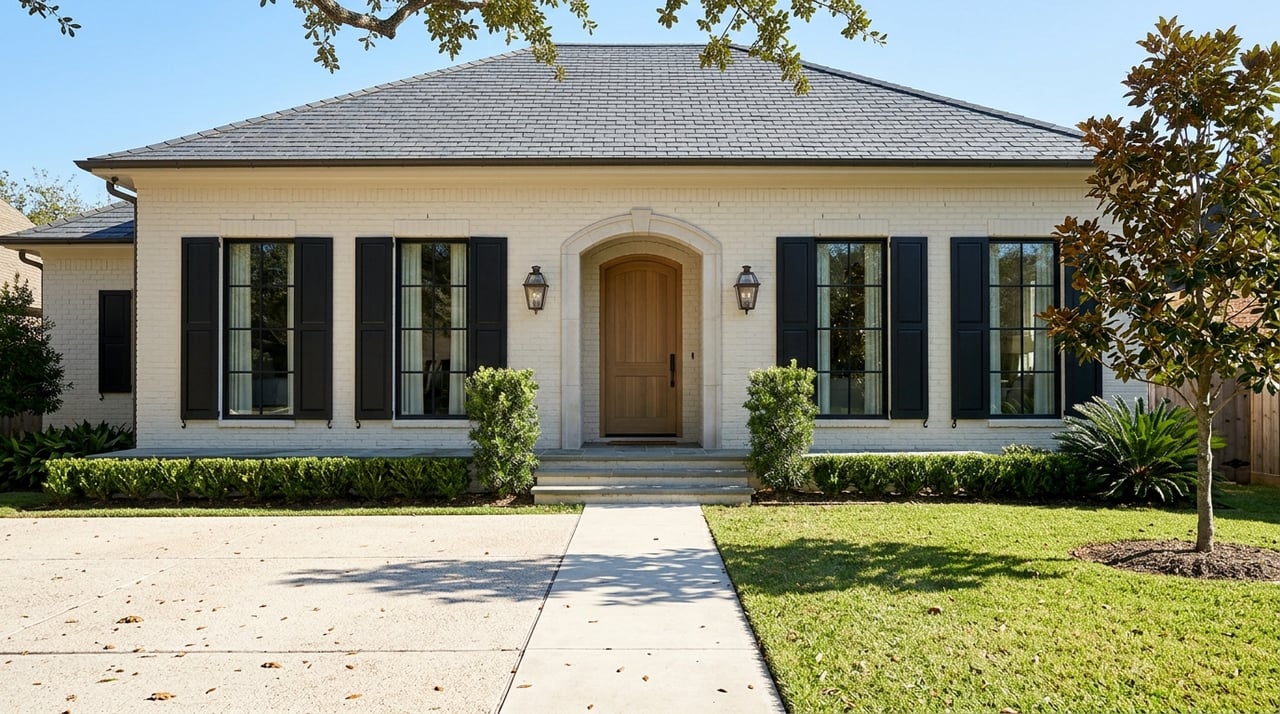
Lakeview is best understood as a detached-home neighborhood. The area is known for framed cottages, ranch-style homes, and bungalow-style houses that became more common after World War II. Many buyers are drawn to the neighborhood’s location near City Park and the lakefront, along with its established residential feel.
Local zoning also helps explain the housing mix. The City of New Orleans describes the Lakeview single-family district as a low-density area intended for relatively spacious single-family development. In practical terms, that means you are more likely to see a traditional move-up home market here than a dense apartment-driven market.
You will still find variety within that profile. Current listings show a mix of older resale homes, renovated properties, and newer construction. That range is one reason pricing can vary so much from one street or property to the next.
How to read Lakeview home prices
If you want a clear picture of the Lakeview market, it helps to look at several pricing metrics together. As of late spring 2026, Zillow’s Lakeview home value index was $517,324, Redfin’s trailing three-month median sale price was $529,322, and Realtor.com’s median listing price was $575,000.
Those numbers are not necessarily in conflict. They reflect different methods, time periods, and sometimes different neighborhood boundaries. One metric may track estimated home values, another may reflect recent closed sales, and another may show asking prices from active listings.
For that reason, no single number tells the whole story. If you are pricing a home to sell or trying to decide whether a listing is fair, the most useful approach is to compare sold data, active listings, and days on market together.
Current Lakeview price ranges
Today’s active Lakeview single-family listings generally fall into a few broad bands. Older or smaller resale homes often appear in the roughly $250,000 to $400,000 range. Renovated move-up homes commonly sit around $450,000 to $700,000.
At the upper end, newer construction or larger rebuilt homes often land between about $800,000 and $1.2 million or more. This is a listing snapshot, not a closed-sale average, but it does show how much condition, size, and age can influence pricing in Lakeview.
That spread is especially important if you are shopping online. Two homes may both be in Lakeview, but one may be an older home with update needs while the other may be a recent build with a much larger footprint and modern finishes. Looking only at neighborhood averages can hide those differences.
What the pace of the market says
Lakeview is not an anything-goes market. Buyers are still active, but the data suggests they are paying attention to price and condition. Redfin describes the neighborhood as somewhat competitive, with a median 35 days on market, a 97.9% sale-to-list ratio, and 7.1% of homes selling above list price.
At the same time, 31.0% of homes saw price drops. Realtor.com also showed a median 73 days on market and 236 homes for sale, down 27.51% year over year. Taken together, that points to a market where well-positioned homes can still move, while overpriced or condition-sensitive listings may sit longer and require adjustments.
For sellers, that means preparation and pricing matter. For buyers, it means there may be room to negotiate on some properties, especially older homes or listings that need work.
Price per square foot needs context
Price per square foot can be helpful, but only if you use it carefully. Realtor.com reported $244 per square foot for Lakeview listings, while Redfin reported $258 per square foot on recent closed sales.
That does not mean one number is wrong. It means one reflects active asking prices and the other reflects recent transactions. If you are comparing homes in Lakeview, price per square foot should be one tool among many, not the only tool.
How Lakeview compares to New Orleans
Lakeview generally sits above the broader New Orleans market on price. Realtor.com reported a citywide median listing price of $325,000 in June 2026, while Lakeview’s median listing price was $575,000.
Nearby neighborhood medians also help show where Lakeview fits. Realtor.com reported about $296,250 in Mid-City, $425,000 in Uptown and Carrollton, $419,500 in West End, $349,500 in Navarre, and $837,000 in City Park.
For you, this means Lakeview usually competes in a more specific part of the market rather than against the city as a whole. Buyers often weigh tradeoffs like lot size, parking, home condition, and whether they prefer a renovated resale or a newer build.
What buyers should watch in Lakeview
If you are buying in Lakeview, start by narrowing your comparisons. Because neighborhood boundaries vary across websites, you will get a more reliable picture by comparing sold homes, active listings, and days on market within the same geographic definition.
It also helps to separate homes by condition. Older homes and homes needing work may offer more room for negotiation, while polished renovations and new construction often command stronger pricing. That distinction can matter more than the neighborhood average.
Flood risk and elevation should also be part of your due diligence. The City of New Orleans has continued funding home-elevation projects in Lakeview, and the city says flood insurance is essential in New Orleans. Before you make an offer, verify elevation, flood zone, and insurance costs so you understand the full ownership picture.
What sellers should know right now
If you are selling in Lakeview, this is a market that rewards discipline. The neighborhood’s owner-occupied profile and low-density single-family character support steady end-user demand, but today’s mix of price drops and longer listing times shows that buyers are selective.
That means your first pricing decision matters. A home that is presented well and priced in line with current competition has a better chance of attracting serious interest early. A home that starts too high may lose momentum and require reductions later.
Preparation matters too. In a neighborhood where buyers compare renovated resales, older homes, and newer builds side by side, details like condition, presentation, and overall polish can make a measurable difference in how your home is received.
The bigger picture on Lakeview
Lakeview remains one of New Orleans’ more established detached-home markets, with a housing stock that feels distinct from denser parts of the city. Its higher price point, stable owner-occupied base, and range of resale and newer-construction options make it an important neighborhood for buyers looking for space and for sellers aiming to attract end users who know what they want.
The most important takeaway is simple. Lakeview is a nuanced market, not a one-number market. When you read the data in context, it becomes much easier to spot value, set realistic expectations, and make a confident next move.
Whether you are comparing a renovated cottage, evaluating a larger rebuild, or preparing to list a long-held home, local context matters. If you want tailored guidance on Lakeview pricing, positioning, or next steps, connect with Kara Lashley for thoughtful, local advice.
FAQs
How should you read Lakeview New Orleans home price data?
- Use multiple data points together, because Lakeview boundaries, time frames, and metric types can vary across platforms.
What types of homes are common in the Lakeview New Orleans housing market?
- Lakeview is primarily a detached-home market with framed cottages, ranch-style homes, bungalow-style houses, renovated resales, and some newer construction.
Is Lakeview more expensive than the overall New Orleans housing market?
- Yes. Recent data shows Lakeview’s median listing price sits well above the broader New Orleans median listing price.
What should buyers watch for in the Lakeview New Orleans market?
- Focus on comparable homes within the same boundary set, pay close attention to condition, and verify elevation, flood zone, and insurance costs before making an offer.
What should sellers know about listing a home in Lakeview New Orleans?
- Sellers should expect pricing, condition, and presentation to matter, since well-positioned homes can move while overpriced listings may sit longer or need reductions.