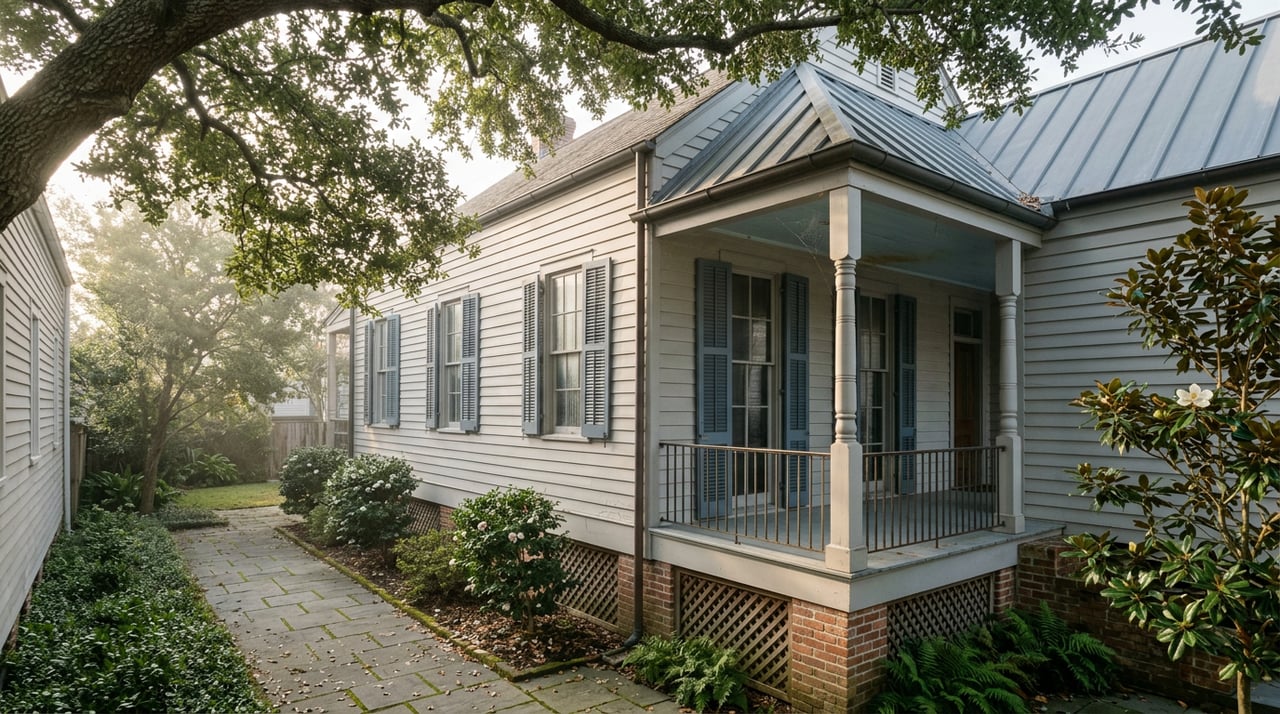
In 2024, an Uptown homeowner bought the property next door with plans to tear down the shotgun house on it. The building had been rented to student tenants, the facade had been altered, and the owner had already consulted several architects and contractors before deciding demolition was the better path forward. On paper, this looked like exactly the kind of project Uptown's reputation as a lightly regulated historic district should have waved through. It wasn't. The Historic District Landmarks Commission found the house structurally sound with an intact interior and denied the demolition request outright, one of three such denials at a single July meeting that also included a similarly altered Craftsman-style house on Austerlitz Street.
If you've been told that Uptown only regulates demolition, and everything short of demolition is fair game, that story should give you pause. The rule is technically true. What it actually catches in practice is a different story, and it matters if you're buying a fixer, planning a camelback addition, or converting one of Uptown's rental doubles back into a single-family home.
What "Partial Control" Actually Means
According to Be New Orleans, Uptown sits in what the city calls a partial control historic district, alongside Mid-City and Parkview. The distinction matters because full control districts elsewhere in the city, including the Lower Garden District and the stretch of St. Charles Avenue itself, require HDLC review for nearly every exterior change: fences, windows, handrails, paint on some properties. The Garden District sits in its own category, one notch stricter than Uptown, where the commission reviews new construction, demolition, and demolition by neglect even though it stops short of full control. Partial control districts like Uptown skip most of that. The commission's jurisdiction there is generally limited to demolition as the ordinance defines it.
That's the part everyone hears. What gets left out is how the ordinance defines demolition, and the definition is broader than the word suggests. According to attorneys at Steeg Law, who work directly with buyers and owners navigating these districts, HDLC's demolition review in Uptown applies to any project that crosses specific thresholds, whether or not a single wall actually comes down.
The Definition Doing the Work
According to Adamick Architecture, under HDLC guidelines, a project counts as demolition, and therefore requires commission review, if it does any of the following:
- Alters or removes more than 50 percent of the total exterior wall area
- Removes or alters more than 50 percent of the existing roof structure
- Removes or alters more than 25 percent of historic materials on the primary facade
- Raises an existing building to create additional habitable space
That last one deserves a second look. Raising a house is common in New Orleans, often for flood mitigation or to add living space beneath an existing structure. It has nothing to do with tearing anything down. Under this ordinance, it's treated the same as demolition anyway.
Camelback additions carry their own wrinkle. Architects working in Uptown note that the HDLC requires the second story of a camelback to begin no more than two rooms back from the front of the house, a rule meant to preserve the historic silhouette from the street. It's a design constraint that shows up on paper long before it shows up in a contractor's bid, and it can quietly reshape what a buyer thought they were purchasing room for.
Same Rulebook, Two Outcomes
The clearest way to see how this plays out is to look at real projects that landed on opposite sides of the line. Studio BKA Architecture, which has worked in both partial and full control districts around the city, has documented a handful of these side by side.
On Camp Street, in Uptown's partial control district, the firm removed the rear historic room of a house to convert it into a camelback. Because the project stayed under the wall and roof thresholds and left the front facade untouched, it triggered no commission review at all. A separate Uptown project, an addition on Austerlitz Street, did propose changes to the front facade, but kept them small enough to be approved at the staff level rather than going before the full commission.
Compare that to a renovation in Carrollton, another partial control district governed by the same demolition-only rule as Uptown. The owner wanted to remove the historic roof and replace it with a new one that included dormers. Because the new roof pitch didn't match the original, HDLC staff determined it wasn't a "replacement in kind," which pushed the project into a full commission review at a council hearing.
Three projects, one rulebook, three different outcomes. The variable wasn't the neighborhood's control designation. It was how much of the existing structure each project actually touched.
When "Demolition" Already Happened
The owner of the similarly altered Craftsman-style house on Austerlitz Street mentioned earlier asked permission before doing the work. A separate case from the same July meeting shows what happens when the work comes first.
At a property on Audubon Street, contractors demolished the front room of the house during a renovation that had already received a Certificate of Appropriateness, just not for that scope of work. The commission treated it as a retention violation and used the moment to remind property owners of two things that matter well beyond that one address, as the Preservation Resource Center explains: installation of HVAC equipment requires HDLC review even though it sounds purely mechanical, and violations don't disappear when a property changes hands. They stay attached to the house.
This is where the Preservation Resource Center's advice to prospective buyers is worth taking seriously. Their guidance compares skipping a permit history check to buying a car without checking whether it's been in an accident, and it points buyers to the city's One Stop App, where anyone can search a property's permitting and violation history before making an offer. For a buyer eyeing an Uptown double with plans to combine it into a single-family home, that search takes a few minutes and can save months of finding out the previous owner already has an open violation waiting to become your problem.
What This Means If You're Buying to Renovate
None of this means Uptown's regulatory environment is as tight as the Garden District's. It isn't. Plenty of interior work, cosmetic exterior updates, and modest additions move through with no commission review at all, sometimes with no review beyond a standard building permit. The mistake is assuming that "demolition only" means your project is exempt because it isn't literally a teardown.
Before you write an offer on a fixer with big renovation plans, or list a property you've already started reshaping, a few steps are worth the time:
- Search the address on the One Stop App to see whether there's an existing violation or open permit history attached to the property.
- Sketch out your renovation scope against the thresholds. If you're removing more than half a wall, more than half a roof, a quarter of the front facade, or raising the house itself, plan for commission review, not just a staff sign-off.
- Build in the timeline. Architects working these districts regularly quote a minimum of six to eight weeks from a complete application to approval, longer if the commission asks for revisions.
- If your renovation includes a camelback, confirm the second story sits within two rooms of the front before you finalize floor plans.
For sellers, the same logic runs in reverse. If a past renovation on your property pushed past these thresholds without going through review, that history is discoverable, and a buyer's due diligence will likely find it before closing.
A Few Quick Answers
Does a full interior renovation in Uptown require HDLC review? Generally no, as long as the work stays inside the house and doesn't touch the exterior walls, roof, or facade in ways that cross the thresholds above.
What if I just want to replace my roof? Straight replacement in kind, matching the existing pitch and materials, typically doesn't trigger review. Changing the pitch or adding features like dormers can push it into commission territory, as the Carrollton case above shows.
How do I find out if a property already has an HDLC violation? Search the address at onestopapp.nola.gov, which pulls permitting and violation history directly from city records.
If you're weighing a fixer in Uptown, or trying to figure out what a renovation you're already mid-project on means for a future sale, this is exactly the kind of detail that changes a timeline before it changes a closing date. Kara Lashley has spent her career in these blocks and can walk through what your specific plans mean before you're locked into a contract. Let's Connect.
This article is general information, not legal, tax or financial advice. Consult a qualified professional about your situation.